
Arrest Warrants in Monroe County
An arrest warrant gives an officer legal authority to take a named person into custody. A complaint supported by probable cause comes first. A judge or magistrate then issues a Monroe County arrest warrant. Under the Michigan court rules, the document must identify the person and the offense and must command an officer to make the arrest. A summons is the preferred process in many cases instead. A warrant issues only when the rule's conditions are met. Michigan law adds one safeguard the public never sees. Before a warrant issues for a person not already in custody, officers must run a parole-status check in the restricted law-enforcement network.
How a Monroe County Arrest Warrant Starts
Monroe County's own prosecution page lays out the local sequence. An officer with probable cause can arrest without a warrant in some situations. Otherwise the officer submits a warrant request. The prosecutor then reads the reports, the witness statements, and the prior record before authorizing charges. A complaint gets prepared, and the 1st District Court handles the arraignment and first appearance. A felony can climb to the 38th Circuit Court after the preliminary stage. That move explains how one Monroe County case ends up in two court systems over time. The county's Steps in a Prosecution page lays out the charging and bond flow from start to finish.
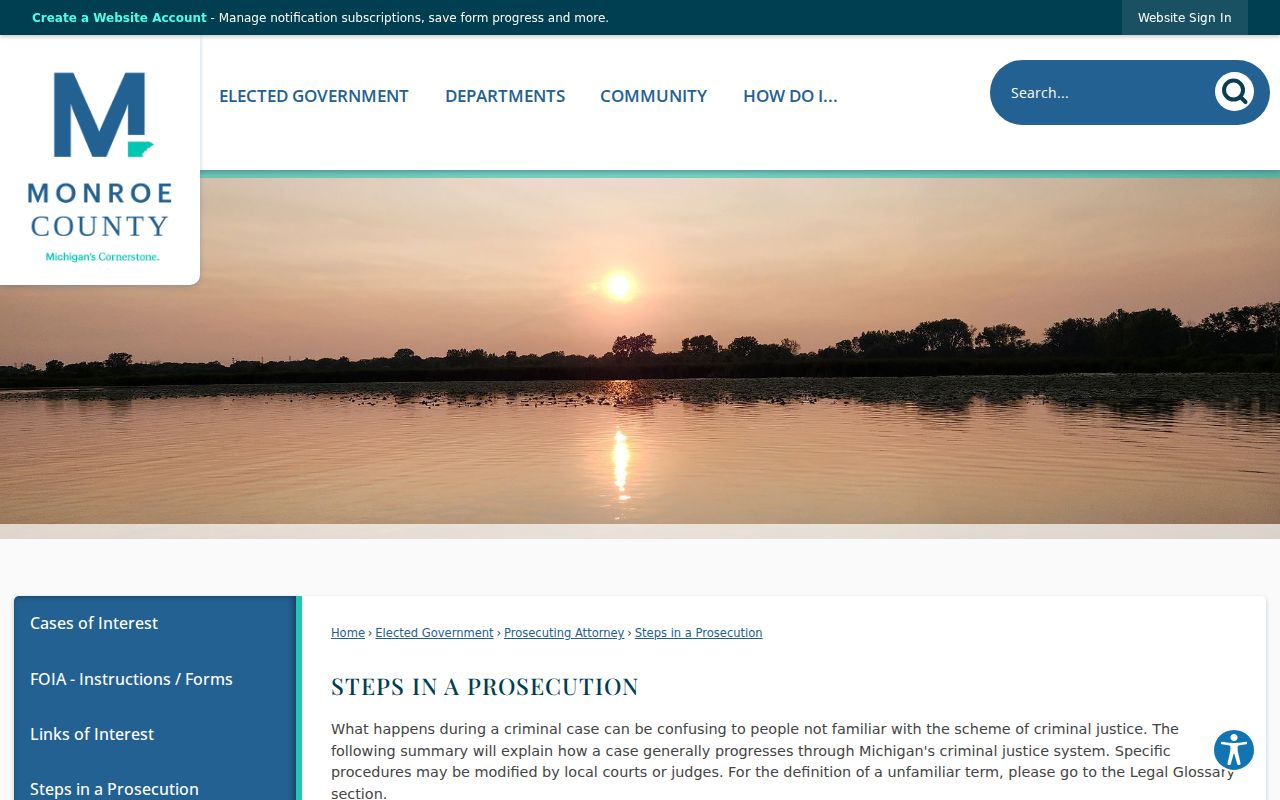
Knowing the stage tells you which Monroe County clerk to call, since the district and circuit files live in separate offices.
What a Monroe County Arrest Warrant Contains
Michigan rules set the minimum an arrest warrant must say. Everything around it sits in the Monroe County court file, and that file is the version that counts.
| Case and Warrant Number | The identifier for the complaint and the warrant |
|---|---|
| Issuing Court and Judge | The judicial officer who authorized the process |
| Person Named | Name and identifying details, which a public page should never republish |
| Offense and Statute | The alleged crime and its classification |
| Probable-Cause Basis | The complaint or affidavit, which can be withheld while a case is open |
| Bond or Hold | A judge-set amount, a release term, or a hold from another agency |
| Service and Return | Which agency holds the warrant and whether it has been executed |
What Booking Involves at the Main Jail
The county jail guidebook walks through booking step by step. Intake data comes first, then a medical screening, fingerprints, a photograph, a search, a property receipt, and classification. One free call for bond or family is allowed. Property and identification rules are tight. A family member should not show up with a bag of belongings. The Main Jail sits at 100 E. Second Street in Monroe, and the county runs a separate Dormitory Facility on East Dunbar Road. Ask the jail which Monroe County facility handles the intake before you drive over, because not every one takes every arrest.
How Monroe County Arrest Warrants Are Served
Sheriff's deputies, city and village police, and other licensed peace officers all serve Michigan warrants. The Monroe County Sheriff's Office is the countywide agency. It also contracts for police service in several townships. So a Monroe County warrant might arrive with a deputy or a local officer at the door. State law lets an officer pursue and arrest a person anywhere in Michigan on a warrant issued here. A Monroe County warrant can therefore be served in another county. Federal warrants work differently. Federal agents and the U.S. Marshals handle those, sometimes with local partners. An out-of-state matter can add a fugitive hold and extradition.
Bond on a Monroe County Warrant
Bond gets set at the arraignment in Monroe County. The county publishes no universal bond schedule for warrants. The judge picks the type and the amount, and the answer can shift from one case to the next.
| Bond Type | What It Means |
|---|---|
| Cash bond | Money posted in the amount the court ordered |
| Surety bond | Arranged through a bondsman on the county's current approved list |
| Personal recognizance | Release on a promise to appear, when the court allows it |
| Hold or no bond | Another agency or a legal restriction prevents release on payment |
The County Clerk publishes the approved bondsman process. Applications run November 1 through 30. The list takes effect January 1. Inmate-account deposits can be made at kiosks or online and may be used toward bond, with any processing fee confirmed at the deposit. The county's approved bondsman page posts the application window and the clerk contact.
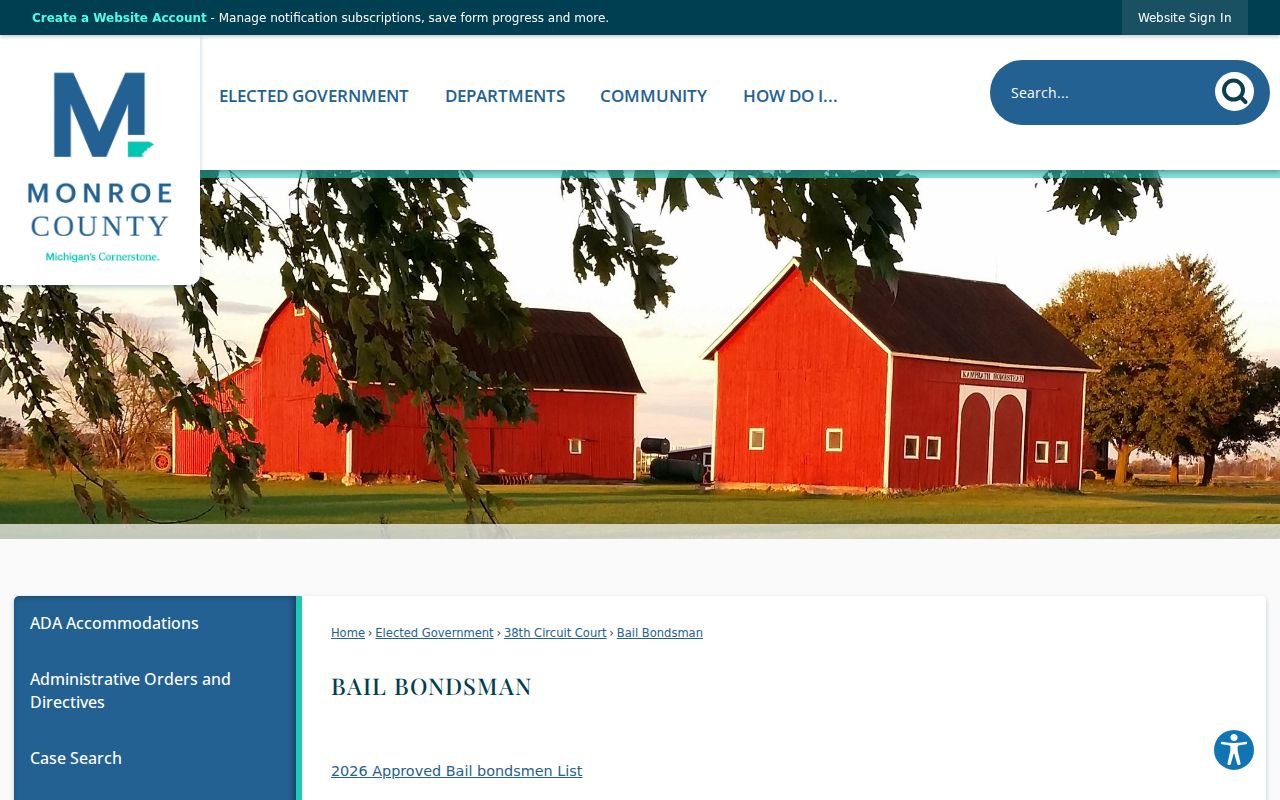
Check any bondsman against the current Monroe County list before signing anything. Never pay a caller who demands gift cards.
Arrest Warrant vs Summons vs Bench Warrant
Three kinds of process reach a defendant in Monroe County, and arrest warrant, summons, and bench warrant are not interchangeable.
| Point | Arrest Warrant | Summons | Bench Warrant |
|---|---|---|---|
| How it starts | Probable-cause complaint for an alleged offense | A charge filed with a court date instead of custody | A missed appearance or a violated order |
| Who signs it | A judge or magistrate | A judge or magistrate | The judge holding the case |
| Custody on service | Yes | No, the person appears | Yes |
| First move | Arraignment and bail | Show up on the date | Call the clerk about a recall or new date |
Arrest Warrant or Search Warrant
In Monroe County, a search warrant is not a status check on a person. It authorizes officers to search a described place, property, person, or evidence location. Michigan law demands probable cause and a description of what may be searched. An arrest warrant targets a person instead. The affidavit behind a search warrant can be sealed or withheld to protect an investigation, privacy, or safety. A public Monroe County docket may therefore show nothing at all. So a search-warrant entry should not be read as a charge against anyone named there. The Michigan Court Rules govern both kinds of process.
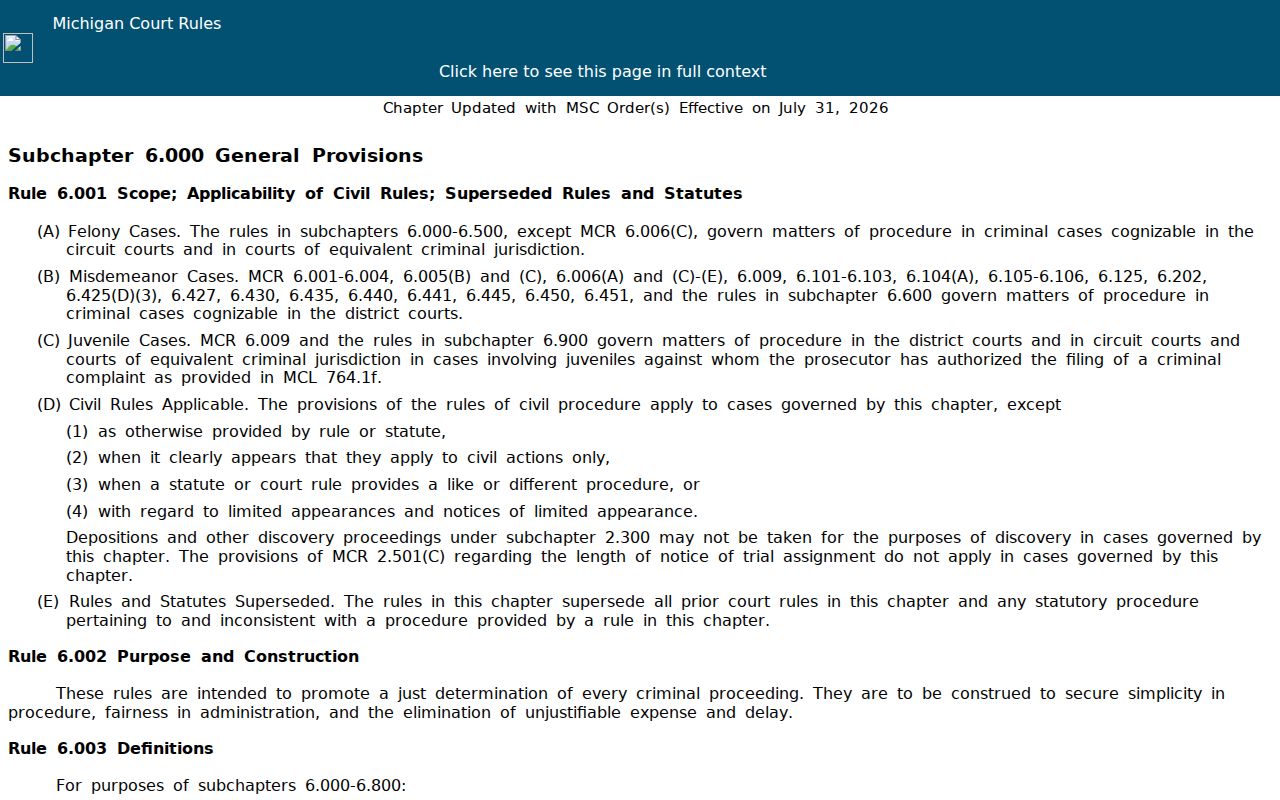
The same rules cover arraignment timing. That is why a person arrested on a Monroe County warrant goes before a judge quickly.
If You Find a Monroe County Warrant
A Monroe County warrant does not improve with time. A routine traffic stop can turn it into a custodial arrest, so move deliberately and in order.
- Call the issuing court and confirm the warrant, the charge, and the bond.
- Talk with a Michigan attorney about a recall motion, a walk-in appearance, or a scheduled surrender.
- Ask the court where to report, what identification to bring, and what the jail allows.
- Arrange bond through the court or a bondsman on the county's approved list.
- Keep the receipt, the court order, and the next hearing date.
Important: Talk with a lawyer before surrendering, confirm the intake location with the jail, and treat any call demanding immediate payment as a fraud attempt.
A Monroe County warrant overview walks family members through these same steps.
A Federal Warrant Is a Different System
Monroe County belongs to the Eastern District of Michigan, and no federal courthouse stands inside the county. That matters. A federal arrest warrant starts with a federal complaint or a sealed indictment, and a federal magistrate or district judge signs off on it. Federal agents and the U.S. Marshals do the serving, often with local partners. Your county clerk cannot see or cancel a federal warrant. A county records request will not reach one either. Search federal dockets through the federal court system, where document fees apply, or use a free docket alternative that depends on what has been collected. A sealed federal complaint may not appear at all.